Create short IDs with PHP - Like Youtube or TinyURL
K
Khanh is a full stack web developer with over 15 years of experience developing for the web
Search for a command to run...
Khanh is a full stack web developer with over 15 years of experience developing for the web
No comments yet. Be the first to comment.
Elevate your bus reservation experience (or even movie, theater, train, ship, plane tickets) with the React Bus Seat Map Picker – a sophisticated and meticulously crafted script designed exclusively for bus seat bookings. Engineered with strict TypeS...

In previous blog, I migrated all posts from my WordPress to Hashnode at https://blog.donamkhanh.com. Now I create a simple landing page for my main domain and hosted on Github Page. You can access at https://donamkhanh.com. In feature, I'm going to h...

I just finished migrating my blog from Wordpress (self hosted on DigitalOcean) to Hashnode. How did I migrate? I don't have too many articles on Wordpress but I don't like doing it manually so the first thing I did was look to see if there was an aut...

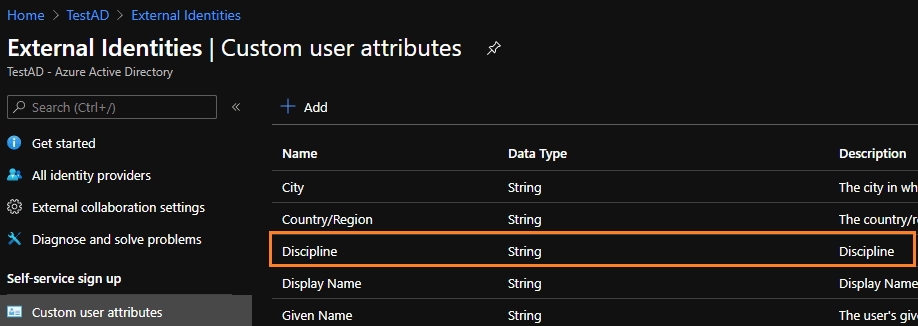
Dự án mình đang làm có yêu cầu sử dụng Azure Active Directory (AAD) để lưu trữ thông tin người dùng & xác thực đăng nhập các kiểu. Ngoài các trường thông tin cơ bản mà AAD hỗ trợ ra thì dự án mình cần lưu thêm 1 số thông tùy chọn khác cho người dùng....
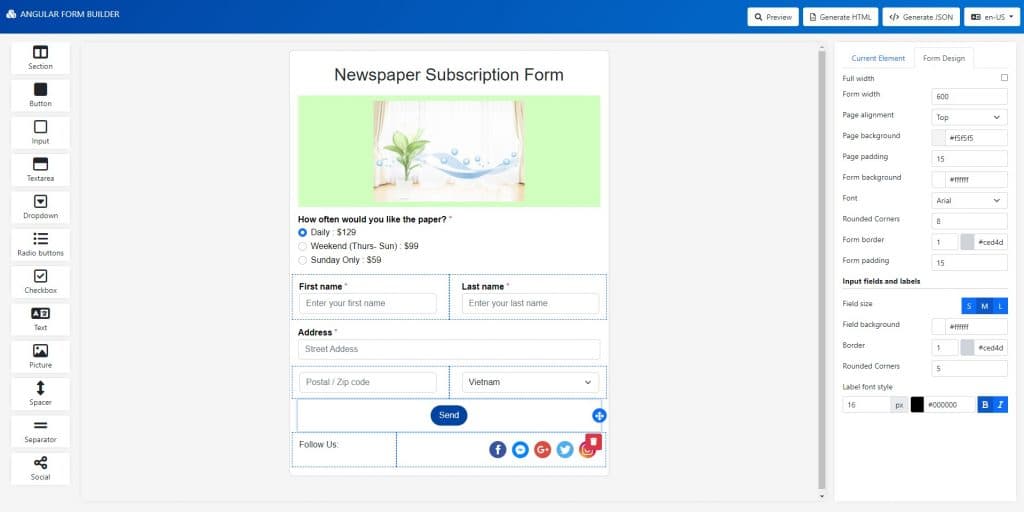
Introduction This is a concise front-end application developed with Angular. You can create a beautiful form with drag and drop visualization. You can get inspiration from it to make a draggable form; at the same time, you can also modify it to suit ...
IDs are often numbers. Unfortunately there are only 10 digits to work with, so if you have a lot of records, IDs tend to get very lengthy. For computers that's OK. ButOther title options where
I created this function a long time ago. Time to be nice and share. human beings like their IDs as short as possible. So how can we make IDs shorter? Well, we could borrow characters from the alphabet as have them pose as additional numbers.... Alphabet to the rescue!
More is Less - the 'math' The alphabet has 26 characters. That's a lot more than 10 digits. If we also distinguish upper- and lowercase, and add digits to the bunch or the heck of it, we already have (26 x 2 + 10) 62 options we can use per position in the ID.
Now of course we can also add additional funny characters to 'the bunch' like - / * & # but those may cause problems in URLs and that's our target audience for now.
OK so because there are roughly 6x more characters we will use per position, IDs will get much shorter. We can just fit a lot more data in each position.
This is basically what url shortening services do like tinyurl, is.gd, or bit.ly. But similar IDs can also be found at youtube: http://www.youtube.com/watch?v=yzNjIBEdyww
Convert your IDs Now unlike Database servers: webservers are easy to scale so you can let them do a bit of converting to ease the life of your users, while keeping your database fast with numbers (MySQL really likes them plain numbers ;).
To do the conversion I've written a PHP function that can translate big numbers to short strings and vice versa. I call it: alphaID.
The resulting string is not hard to decipher, but it can be a very nice feature to make URLs or directorie structures more compact and significant.
So basically:
Source
/**
* Translates a number to a short alhanumeric version
*
* Translated any number up to 9007199254740992
* to a shorter version in letters e.g.:
* 9007199254740989 --> PpQXn7COf
*
* specifiying the second argument true, it will
* translate back e.g.:
* PpQXn7COf --> 9007199254740989
*
* this function is based on any2dec && dec2any by
* fragmer[at]mail[dot]ru
* see: http://nl3.php.net/manual/en/function.base-convert.php#52450
*
* If you want the alphaID to be at least 3 letter long, use the
* $pad_up = 3 argument
*
* In most cases this is better than totally random ID generators
* because this can easily avoid duplicate ID's.
* For example if you correlate the alpha ID to an auto incrementing ID
* in your database, you're done.
*
* The reverse is done because it makes it slightly more cryptic,
* but it also makes it easier to spread lots of IDs in different
* directories on your filesystem. Example:
* $part1 = substr($alpha_id,0,1);
* $part2 = substr($alpha_id,1,1);
* $part3 = substr($alpha_id,2,strlen($alpha_id));
* $destindir = "/".$part1."/".$part2."/".$part3;
* // by reversing, directories are more evenly spread out. The
* // first 26 directories already occupy 26 main levels
*
* more info on limitation:
* - http://blade.nagaokaut.ac.jp/cgi-bin/scat.rb/ruby/ruby-talk/165372
*
* if you really need this for bigger numbers you probably have to look
* at things like: http://theserverpages.com/php/manual/en/ref.bc.php
* or: http://theserverpages.com/php/manual/en/ref.gmp.php
* but I haven't really dugg into this. If you have more info on those
* matters feel free to leave a comment.
*
* @author Kevin van Zonneveld * @copyright 2008 Kevin van Zonneveld (http://kevin.vanzonneveld.net)
* @license http://www.opensource.org/licenses/bsd-license.php New BSD Licence
* @version SVN: Release: $Id: alphaID.inc.php 344 2009-06-10 17:43:59Z kevin $
* @link http://kevin.vanzonneveld.net/
*
* @param mixed $in String or long input to translate
* @param boolean $to_num Reverses translation when true
* @param mixed $pad_up Number or boolean padds the result up to a specified length
*
* @return mixed string or long
*/
function alphaID($in, $to_num = false, $pad_up = false)
{
$index = "abcdefghijklmnopqrstuvwxyz0123456789ABCDEFGHIJKLMNOPQRSTUVWXYZ";
$base = strlen($index);
if ($to_num) { // Digital number <<-- alphabet letter code $in = strrev($in); $out = 0; $len = strlen($in) - 1; for ($t = 0; $t <= $len; $t++) { $bcpow = bcpow($base, $len - $t); $out = $out + strpos($index, substr($in, $t, 1)) * $bcpow; }
if (is_numeric($pad_up)) { $pad_up--; if ($pad_up > 0) { $out -= pow($base, $pad_up); } } } else { // Digital number -->> alphabet letter code if (is_numeric($pad_up)) { $pad_up--; if ($pad_up > 0) { $in += pow($base, $pad_up); } }
$out = ""; for ($t = floor(log10($in) / log10($base)); $t >= 0; $t--) { $a = floor($in / bcpow($base, $t)); $out = $out . substr($index, $a, 1); $in = $in - ($a * bcpow($base, $t)); } $out = strrev($out); // reverse }
return $out; } echo alphaID(27101984); //M2IPb echo alphaID('M2IPb', TRUE);
More features